


A broader shift in operational thinking
Morocco’s airbase expansion signals shift to forward air deterrence
The installation’s extended runway, radar infrastructure and drone operations capacity enable Morocco to maintain continuous monitoring over large desert zones.
Tuesday 28/04/2026

A broader shift in operational thinking
RABAT – Morocco’s expansion of the Bir Anzarane airbase near Dakhla is more than an infrastructure upgrade. It reflects a broader evolution in the country’s defence doctrine, moving from static territorial defence towards forward deterrence, persistent surveillance and rapid-response capability across the Sahara-Sahel corridor.
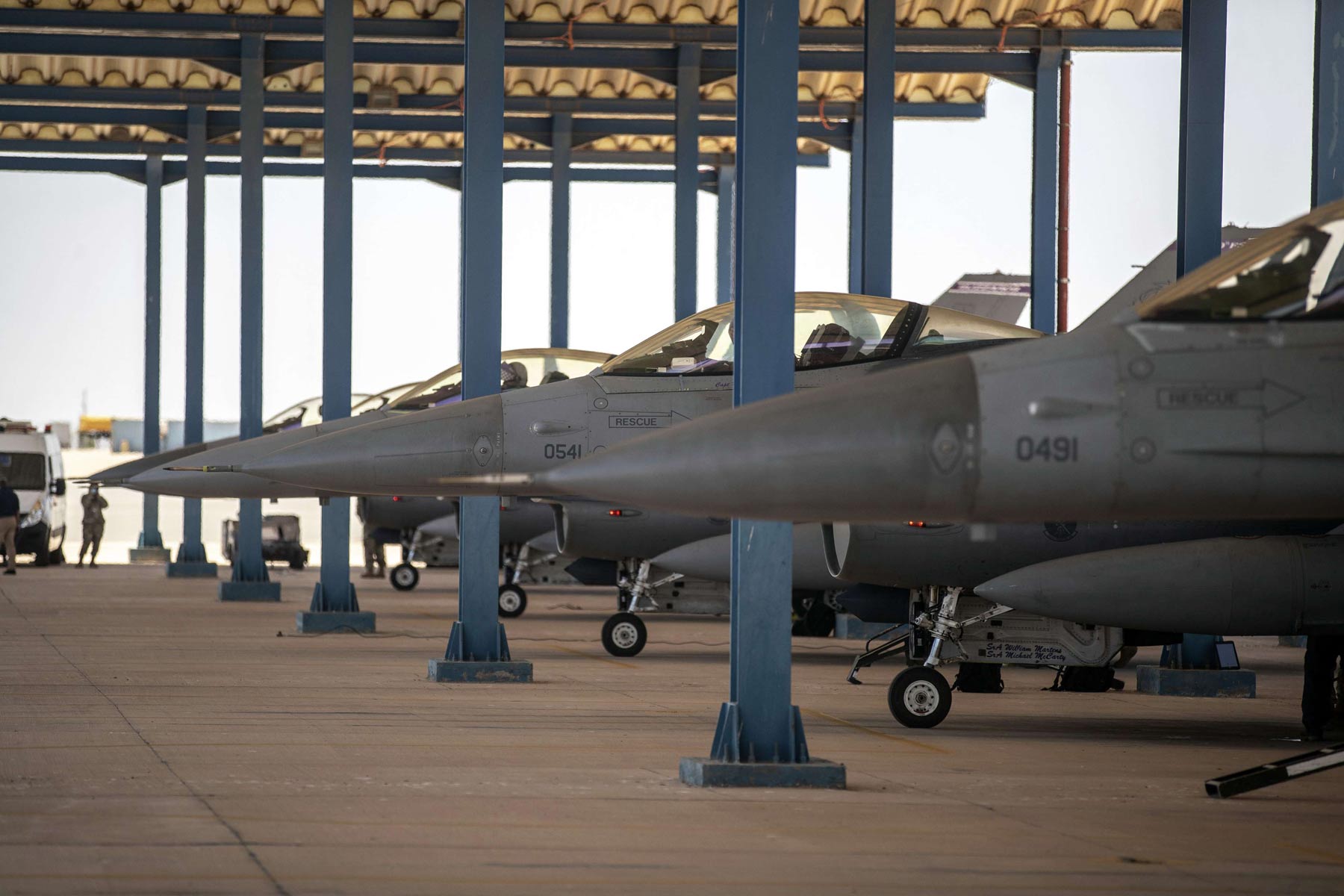
The transformation of the base from a limited helicopter facility into a multi-role air hub capable of hosting fighter jets, drones and attack helicopters signals a strategic emphasis on air dominance over vast and sparsely populated terrain.
The installation’s extended runway, radar infrastructure and drone operations capacity enable Morocco to maintain continuous monitoring over large desert zones, including the sand berm system that separates controlled territory from contested areas further east and south.
This capability is increasingly seen as central to Morocco’s approach to managing security risks in the wider Sahel region, where militant activity, smuggling networks and cross-border movements remain persistent concerns.
The deployment of unmanned aerial systems such as Heron-1, Hermes 900, Wing Loong 1 and 2, and Bayraktar TB2 platforms reflects a broader shift in operational thinking. Rather than reacting to incidents after they occur, Morocco appears to be building an integrated surveillance architecture designed to detect and deter activity in advance.
Military analysts argue that this reduces the operational window for hostile movements, particularly in desert environments where early detection is critical.
The proximity of the base to Dakhla also reduces response times for air and ground operations, enabling faster interception of potential threats and more coordinated support for ground forces.
The expansion also highlights Morocco’s growing role in regional security frameworks, particularly in cooperation with the United States. Joint exercises such as African Lion have become a key pillar of this partnership, reinforcing interoperability and intelligence-sharing between the two countries.
Defence reports have also suggested that the site could play a future role in broader Western-backed security architecture in the Sahel, although such developments remain speculative.
At the same time, Morocco has consistently warned that instability in the Sahel is worsening, driven by terrorist groups, separatist movements and organised crime networks operating across porous borders.
The military development comes in the context of long-running tensions over Western Sahara and wider regional rivalries in North and West Africa.
While Rabat frames its southern military infrastructure as defensive and stabilising, external observers note that such expansions inevitably carry geopolitical implications, particularly in a region where competing narratives over sovereignty, separatism and security cooperation remain deeply contested.
Reports have also highlighted concerns over alleged links between armed groups and transnational militant networks operating in the Sahel, underscoring Morocco’s stated view that separatism and terrorism are increasingly interconnected threats.
Taken together, the Bir Anzarane expansion reflects a broader restructuring of Morocco’s security posture: one that prioritises air power, intelligence-led surveillance and deeper integration with Western defence systems.
Rather than isolated infrastructure development, the base appears to form part of a wider strategic framework aimed at strengthening Morocco’s ability to project control across its southern territories and adjacent regions.
Whether this model leads to greater regional stability or further militarisation of already contested spaces will depend on how surrounding security dynamics evolve in the Sahel and beyond.