


Enduring questions about drama’s responsibility in representing reality
Tunisian TV drama ‘Accident’ sparks heated debate in Ramadan
“Accident” has drawn praise for tackling issues deeply embedded in Tunisian and wider Arab realities: the dominance of money, drug abuse and the impact of technology on human relationships.
Monday 23/02/2026
Enduring questions about drama’s responsibility in representing reality
TUNIS – As the Ramadan television season gets under way, the series “Accident” has commanded attention from its opening episodes on the private channel Nessma El Jadida. It has captured the spotlight not only for the intensity of its drama, but also for the sweeping debate it has sparked across social media platforms.
Directed by Moutii Dridi and inspired by true events, the series quickly transformed into daily fodder for debate, praised by some, criticised by others, defended as fiercely as it is attacked.
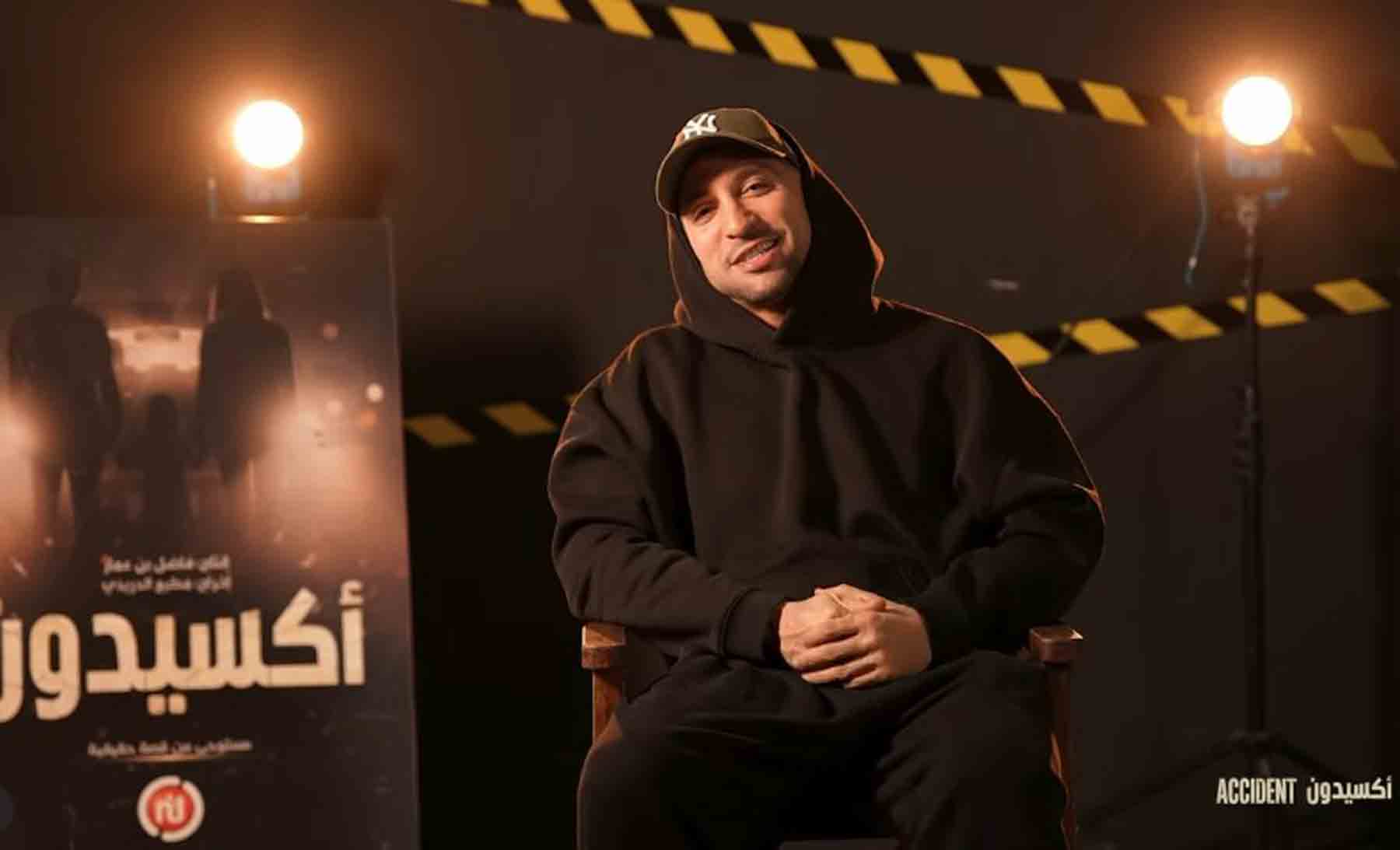
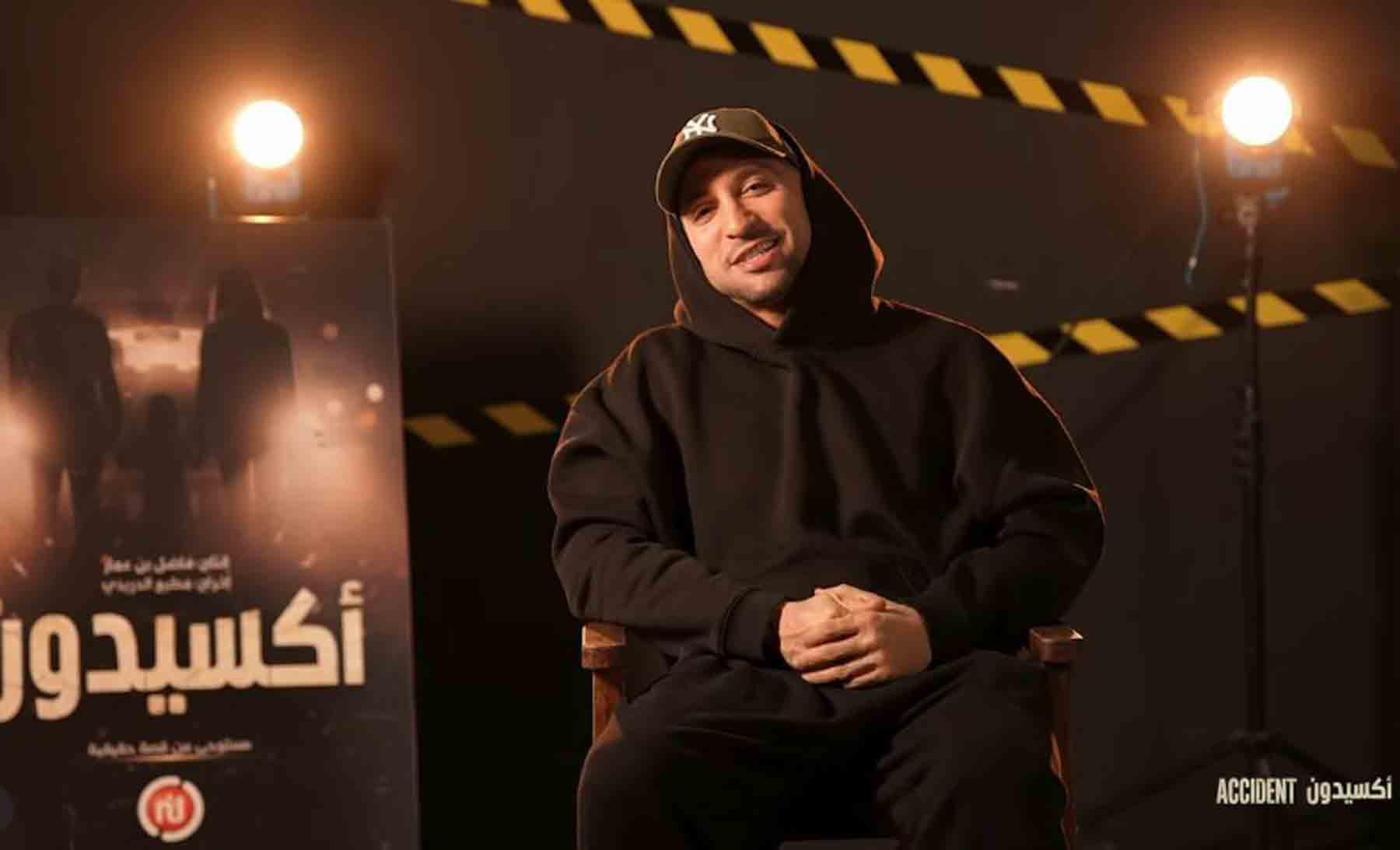
At the centre of the narrative is Youssef, portrayed by Nidhal Saadi, a modest day labourer who earns his living delivering food. He shares a simple, unassuming life with his wife and young daughter. But a fleeting act of digital carelessness, a live broadcast on TikTok, costs him his job, triggering a cascade of personal and social setbacks that drive him to the edge of despair.
In stark contrast to Youssef’s fragile existence stands Karim, a young man adrift in careless luxury, shielded by the vast fortune of his father. The two worlds violently intersect in a devastating accident that takes the lives of Youssef’s wife and daughter, while Karim escapes the scene. As the fallout unfolds, his family intervenes to tamper with the official report, replacing him with another suspect and reshaping the narrative, setting wealth against justice and entrenched privilege against raw vulnerability.
The first wave of controversy, however, had little to do with the storyline. It centred instead on Saadi’s appearance. His decision to shave the beard that had become part of his public image divided viewers into two camps: those who saw it as a bold artistic transformation, and those who struggled to accept the change.
One commenter wrote in his defence: “An actor has every right to change his appearance and experiment with different roles. Artistic criticism is welcome, but mockery and bullying over appearance are unacceptable.”
Another described Saadi as “a hardworking actor who strives each year to present a new character despite production constraints and the dominance of ratings and advertising logic.”
Yet some viewers felt his performance in the opening episodes lacked full conviction, suggesting that “something didn’t flow smoothly”. It was clear that Saadi was attempting to break away from the typecasting that defined his earlier roles, a risk that inevitably raises expectations and scrutiny.
The most heated debate erupted following a courtroom scene. Some viewers argued that the fictional lawyer embodied a troubling reality, that of attorneys who “manipulate cases,” while paying tribute to “every honest lawyer who fears God and is not afraid to speak the truth.”
Others, including self-declared law graduates, criticised what they saw as procedural inaccuracies. One viewer pointed out a legal inconsistency in combining a request for dismissal of the case with a precautionary suspension order, describing the scene as lacking procedural logic. Another commented wryly: “The law is not decorative dialogue in a scene … changing one word can alter a person’s fate.”
Criticism also extended to the courtroom set design, with some arguing that it did not accurately reflect the realities of Tunisian judicial spaces. When drama ventures into sensitive professional territory such as the judiciary, many believe it bears an even greater responsibility for precision.
The debate did not stop there. Some accused the series of resembling the 2006 Egyptian film “Wahed Min El Nas” (One of the People), starring Karim Abdel Aziz, citing narrative similarities: a simple young man, a life-altering accident, and a struggle against powerful elites.
Others countered that the premise of “the ordinary individual confronting a corrupt system” is hardly new in Arab drama, arguing that judgement should rest on the development of events and the quality of treatment rather than superficial parallels.
Beyond the controversy, “Accident” has drawn broad praise for tackling issues deeply embedded in Tunisian and wider Arab realities: the dominance of money, drug abuse, the moral conflict between right and wrong, and, crucially, the impact of technology on human relationships.
Many viewers believe the series is not merely about an accident, but about a generation whose consciousness has been shaped by screens. Technology in the narrative is not decorative background but a hidden protagonist: a live stream destroys a livelihood, an image polishes a reputation, a comment ignites a campaign.
One particularly striking scene features Karim’s father, owner of a private clinic, appearing on a television programme designed to polish his public image. Off-camera, however, he erupts in anger when the discussion veers from the agreed script. For many, the scene offered a sharp commentary on the relationship between advertising and media, and on the duality between public discourse and backstage behaviour.
Alongside Nidhal Saadi, the series features prominent Tunisian actors including Mohamed Ali Ben Jemaa, Feriel Youssef, Ahlem Fekih, Oussama Kochkar, Jihed Cherni and Aziz Jebali, blending seasoned performers with younger talent.
Whether audiences agree or disagree, “Accident” has undoubtedly achieved one essential objective: it has reignited discussion. It has brought to the fore enduring questions about drama’s responsibility in representing reality, the boundaries of artistic freedom and the necessity of accuracy when portraying sensitive professions. Above all, it raises a broader question about how technology shapes destinies in the modern era.
As the episodes unfold, one question remains: can the series sustain its dramatic momentum and convince sceptics, or will the controversy overshadow the story itself? The coming days will reveal whether “Accident” cements its place as one of the season’s defining works, or remains a fleeting Ramadan talking point.