
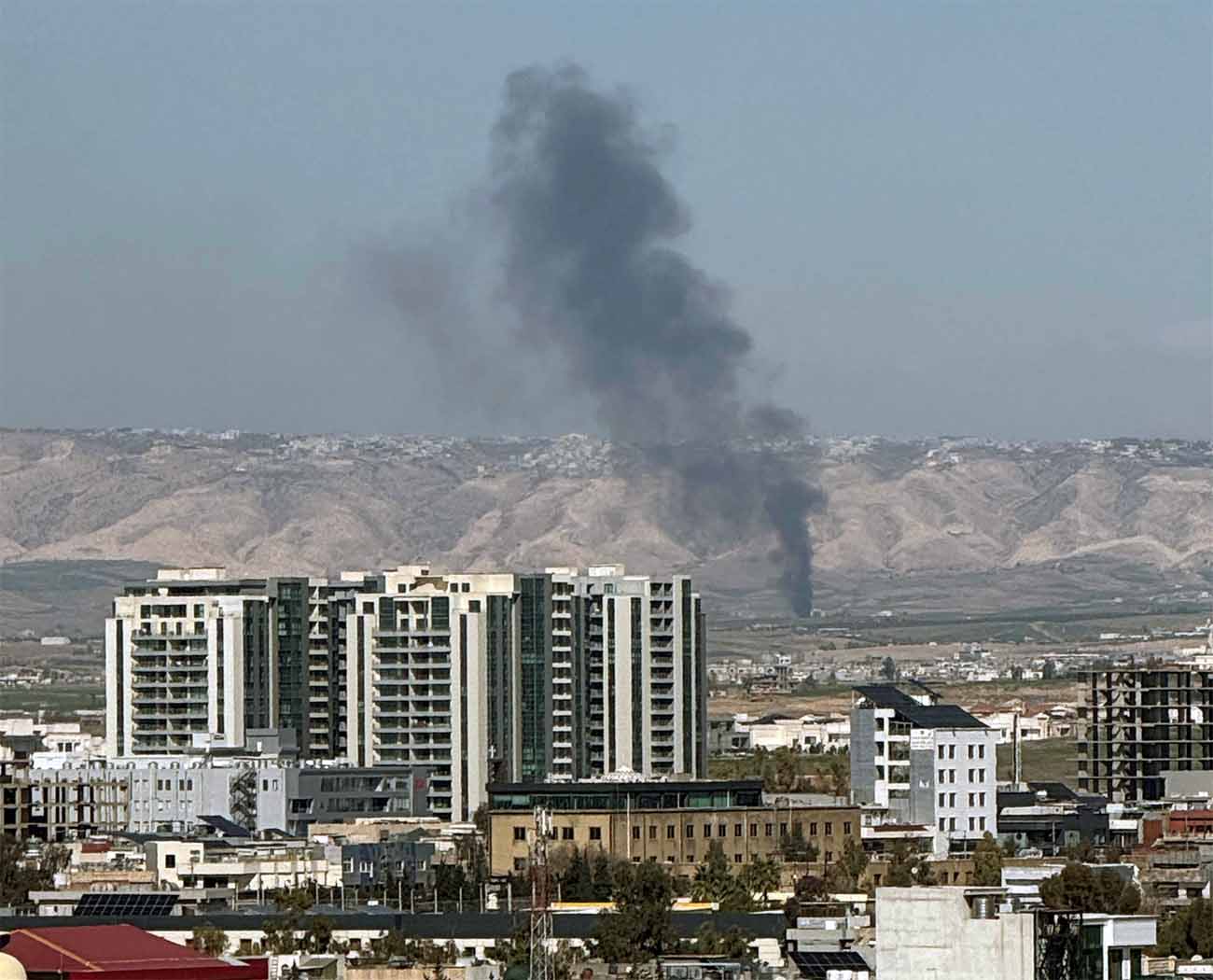
Smoke rises from the site of a drone crash on the outskirts of Erbil
Oil vs security… when Erbil is attacked, the victim is blamed
How can the Region be expected to serve as a secure corridor for Iraq’s wealth while it is itself under attack?
Wednesday 18/03/2026
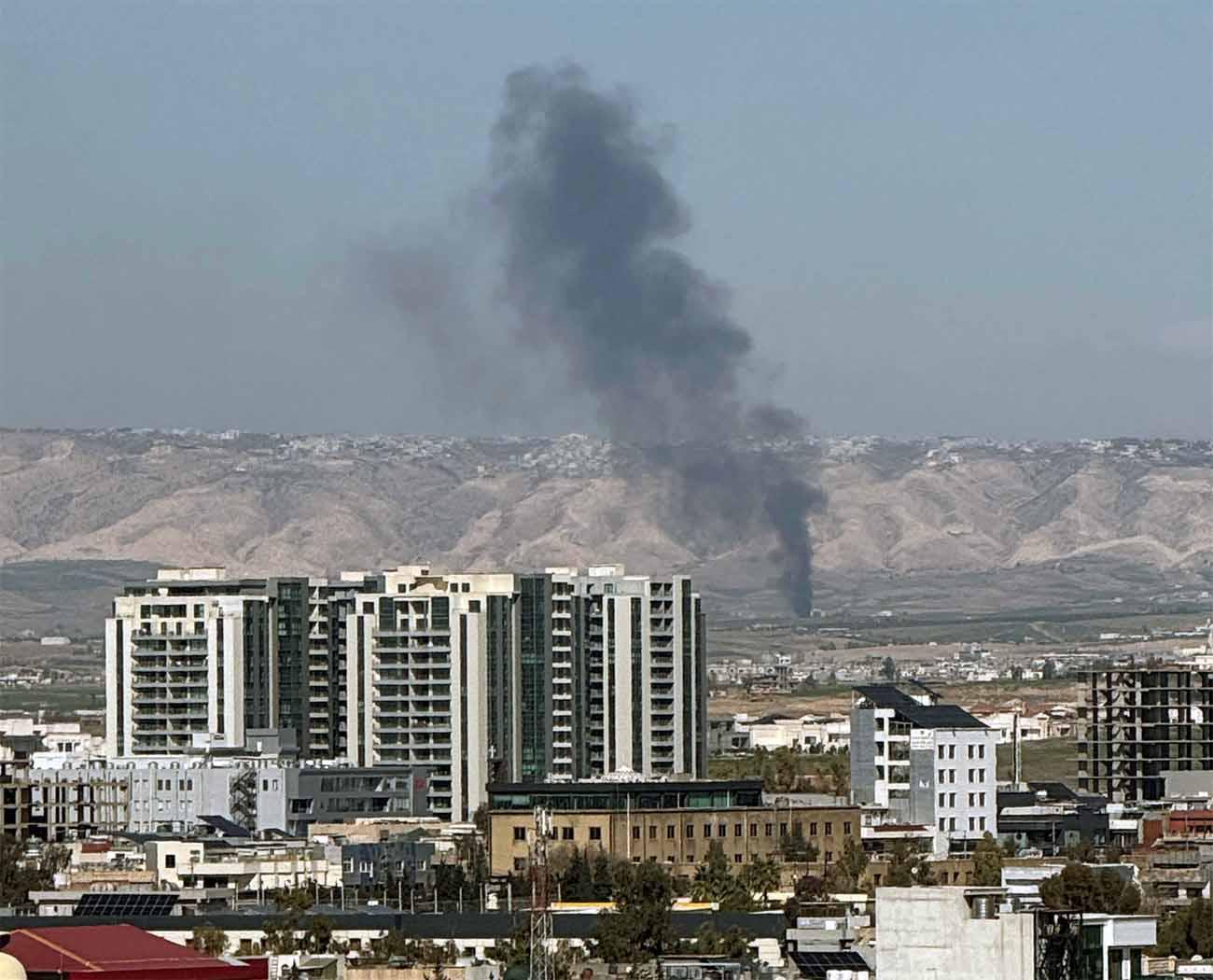
Smoke rises from the site of a drone crash on the outskirts of Erbil
Amid the escalating debate over resuming Iraqi oil exports through the Turkish port of Ceyhan, a familiar media narrative has emerged, accusing the Kurdistan Region of obstructing the “national interest,” while deliberately ignoring a more fundamental truth: oil cannot be separated from security, and the victim cannot be blamed for instability.
Baghdad, through the Ministry of Oil, argues that the Region is linking the resumption of exports to “non-oil conditions,” warning of financial losses caused by halted exports. In contrast, Erbil maintains that its oil infrastructure has been repeatedly targeted by missiles and drones, leading to a shutdown in production, and that any talk of exports without security guarantees is a denial of reality, not management of it.
What is unfolding is not a technical dispute, but a stark political paradox:
A state that demands oil flow is unable to secure its path.
The dominant media discourse ignores this reality, reframing the crisis as “Kurdish intransigence,” while facts indicate that energy infrastructure in the Region has become an open target for armed groups that are officially part of Iraq’s security system and funded by the state budget.
These groups do not operate solely within local dynamics, but within a broader regional framework tied to the so-called “resistance axis” aligned with Iran. This places the attacks within a context of regional pressure that extends beyond Baghdad itself. Meanwhile, despite occasional U.S. strikes against these groups, such actions have failed to halt attacks inside the Region, raising serious questions about the effectiveness and limits of deterrence—and revealing a more complex reality: the security of the Kurdistan Region is not a central priority for either side.
This leads to the question often avoided:
How can the Region be expected to serve as a secure corridor for Iraq’s wealth while it is itself under attack?
Linking oil exports to stopping attacks is not a political condition, but a fundamental rule of economic activity. No state in the world operates vital infrastructure under fire, nor can any responsible government ignore the safety of its assets to appease media narratives or temporarily ease financial pressure.
More concerning is the attempt to frame the federal government’s inability to control armed groups as a justification to blame the Region, rather than as a crisis of sovereignty. These factions do not act in a vacuum, but within a political and security environment well known to Baghdad—yet insufficiently controlled, or perhaps not controlled at all.
What is also overlooked—or deliberately ignored—is another crucial fact: halting oil exports does not harm Baghdad alone, but directly and severely impacts the Kurdistan Region itself. The Region relies in part on oil revenues to pay salaries and maintain economic stability, at a time when Baghdad already handles salary transfers with inconsistency and at times uses them as a pressure tool. How, then, can it be claimed that the Region seeks to obstruct exports when it is among the first to suffer from their suspension?
Moreover, the Region’s share of the federal budget, along with its financial commitments, would also be affected, in addition to the broader political and social repercussions in an already fragile economic environment.
Put simply:
The Region does not have the luxury of obstruction… but it refuses to substitute security with economic necessity.
Thus, the equation reveals itself:
Instead of holding those who launch rockets accountable, blame is directed at those who receive them.
Ultimately, this issue is not about a pipeline, but about the nature of the state in Iraq:
the absence of a state capable of enforcing security, alongside the presence of armed actors that transcend it.
In this reality, attacking the Kurdistan Region becomes an attempt to evade the real question:
Who is responsible for protecting Iraq’s wealth before exporting it?
Because the problem has never been Erbil’s conditions…
but the inability of those responsible to guarantee security.
“When missiles become the norm, oil becomes a detail… and the state is exposed at its first test of security.”
“It is not Erbil that obstructs oil… but the rockets that Baghdad knows who launches, yet fails to stop.”