
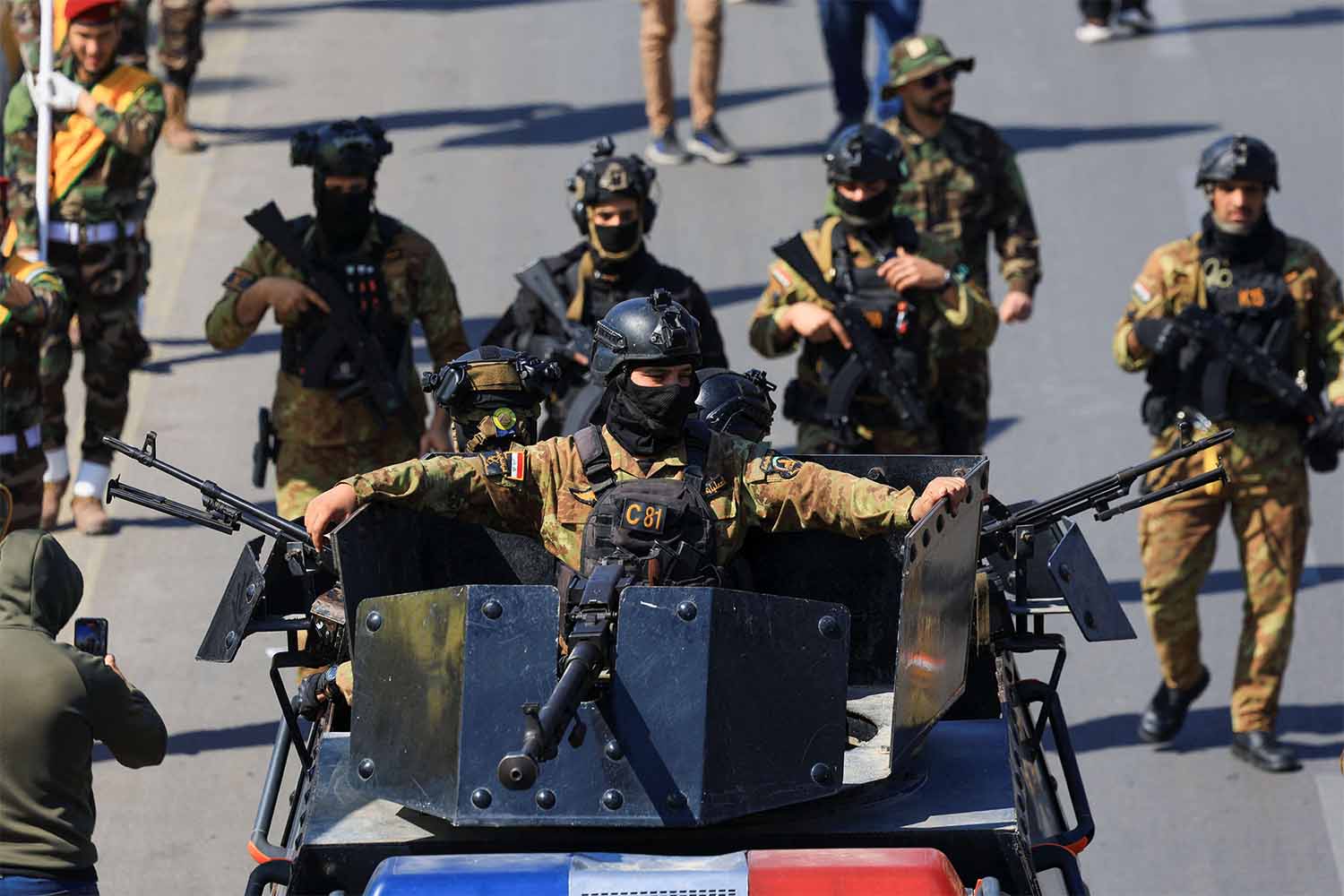
Members of the Iraqi armed group Kataib Hezbollah
From sectarian and jihadist militias to politics: Can Washington turn them into political actors?
The main lesson from the Iraqi and Syrian experiences is that integrating militias into state power only works in a strong state. In weak environments, this approach may instead legitimize armed influence, as formal institutions coexist with forces that retain their weapons outside the state framework.
Tuesday 10/03/2026
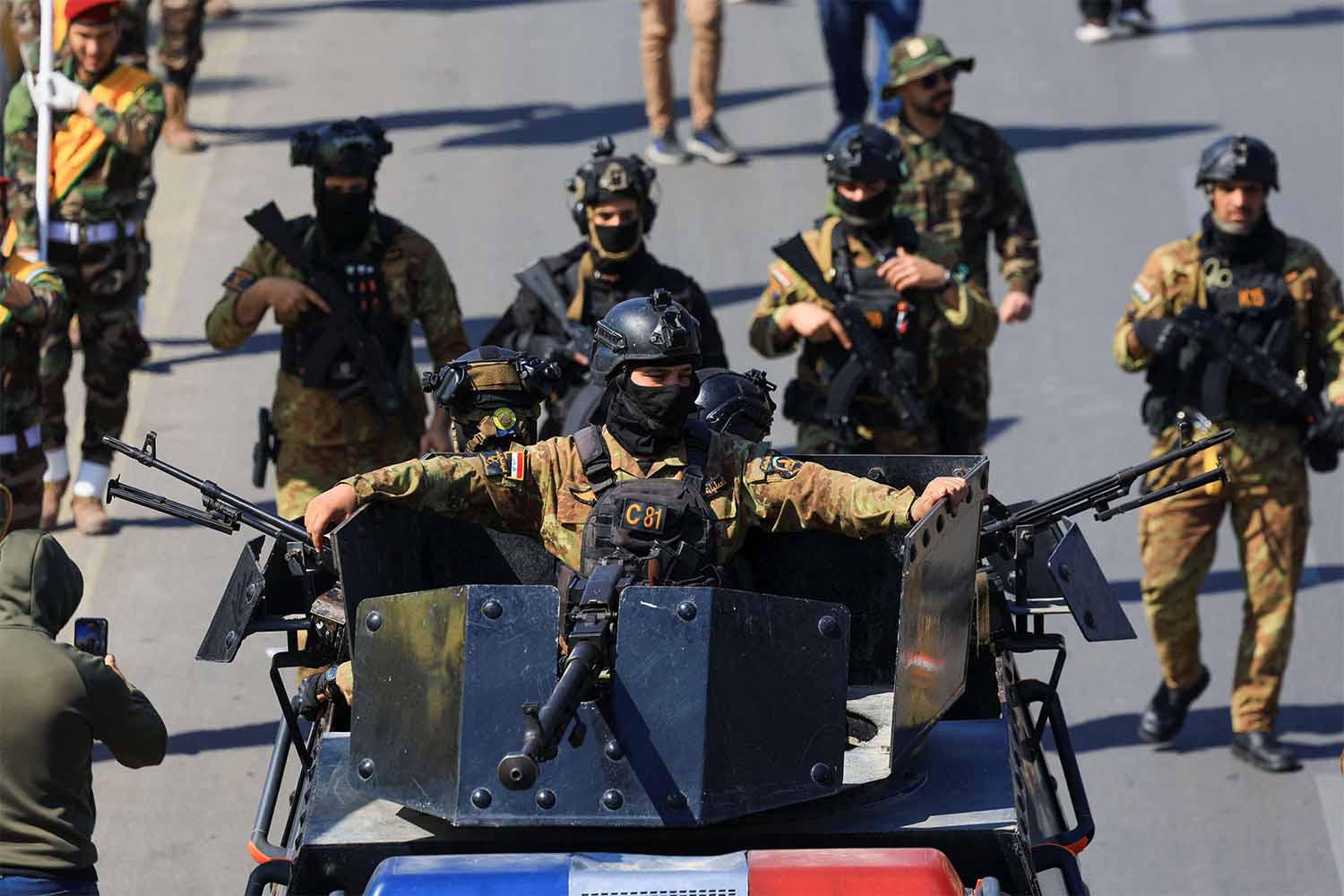
Members of the Iraqi armed group Kataib Hezbollah
Some American think tanks have suggested integrating armed groups into the political process to transform them from military forces into political actors, hoping to contain violence and incorporate them into state institutions.
However, the Iraqi experience has shown that this idea has not worked in practice. Some factions, such as Asa'ib Ahl al-Haq (عصائب أهل الحق) and Kata'ib Hezbollah (كتائب حزب الله), gained seats in parliament and government, yet they maintained their military structure and field influence. With the emergence of the Popular Mobilization Forces (هيئة الحشد الشعبي), these militias gained legal legitimacy and government funding, strengthening their political and security presence simultaneously.
The core problem is that successfully integrating militias requires a strong state capable of monopolizing the use of force. Iraq after 2003 was weak, and regional interventions gave some factions independent sources of power, allowing them to use official institutions to expand their influence rather than be subordinated to them.
In Syria, a similar debate arose over integrating members of armed groups into state structures, but the experience showed that some of these factions persisted within a complex environment with multiple military forces supported by regional and international actors. It is important to distinguish between these groups: Syrian Democratic Forces (قوات سوريا الديمقراطية) is a local Kurdish-Arab alliance that fought against ISIS (داعش) and follows a model of self-administration, whereas Hay'at Tahrir al-Sham (هيئة تحرير الشام) has a jihadist background linked to Al-Qaeda (القاعدة), making its political and ideological project fundamentally different.
These groups are very different from historical and organized armed forces that emerged within clear national projects and were tied to their political leadership. They mostly appeared outside the state framework and within narrow sectarian or ideological boundaries.
The main lesson from the Iraqi and Syrian experiences is that integrating militias into state power only works in a strong state. In weak environments, this approach may instead legitimize armed influence, as formal institutions coexist with forces that retain their weapons outside the state framework.